
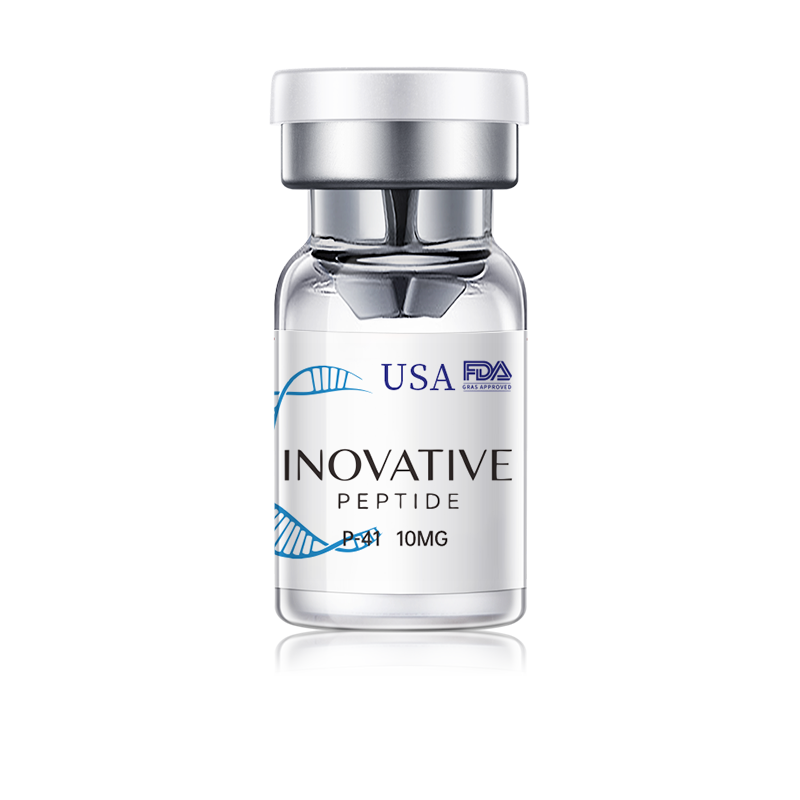
PT-141 (BREMELANOTIDE) – PREMIUM RESEARCH PEPTIDE FOR CENTRAL NERVOUS SYSTEM & MELANOCORTIN RECEPTOR STUDIES
PT-141 COMPREHENSIVE SCIENTIFIC OVERVIEW
PT-141 (Bremelanotide) is a synthetic heptapeptide metabolite of Melanotan II with selective affinity for melanocortin receptors, particularly MC3R and MC4R. This groundbreaking peptide has emerged as a pivotal research tool for investigating central nervous system functions, neuroendocrine signaling, and behavioral modulation. Unlike many peptides that require peripheral activation, PT-141 demonstrates direct blood-brain barrier penetration, making it uniquely valuable for studying central melanocortin pathways and their diverse physiological effects.
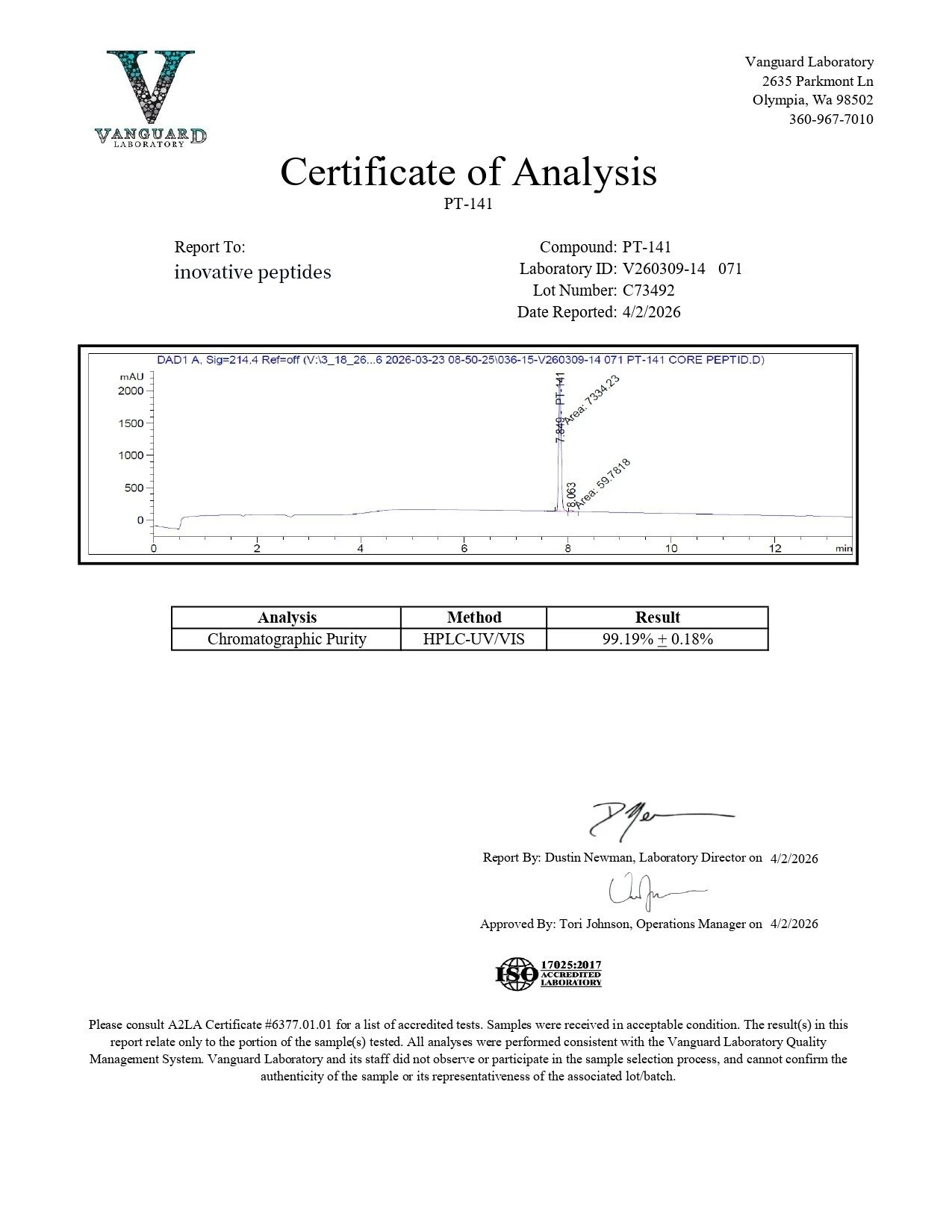
At EliteBiogenix, we provide pharmaceutical-grade PT-141 (≥98% purity) in lyophilized form, rigorously tested via HPLC and mass spectrometry to ensure optimal stability and research reliability. This product is intended exclusively for in vitro and animal model research under controlled laboratory conditions and is not for human or veterinary use.
PT-141 MECHANISM OF ACTION: ADVANCED NEUROLOGICAL PATHWAYS
PT-141 exerts its effects through sophisticated melanocortin receptor interactions:
- Selective Receptor Activation: Demonstrates high affinity for MC4R (Melanocortin 4 Receptor)with significant activity at MC3R, while showing minimal activity at MC1R, MC2R, and MC5R (Hadley, 2005)
- Blood-Brain Barrier Penetration: Crosses the blood-brain barrier efficiently due to its small molecular size and lipophilic properties, enabling direct central nervous system effects (King et al., 2007)
- Dopaminergic Pathway Modulation: Indirectly influences dopamine release in the nucleus accumbensthrough melanocortin receptor activation, affecting motivation and reward pathways (Martin et al., 2011)
- Nitric Oxide Activation: Stimulates nitric oxide synthase activityin specific neural circuits, contributing to its physiological effects (Rosen et al., 2013)
PT-141 KEY RESEARCH APPLICATIONS & EVIDENCE-BASED STUDIES
1. CENTRAL NERVOUS SYSTEM RESEARCH
PT-141 has demonstrated significant efficacy in neurological studies:
Neuroendocrine Response Study:
- Protocol: 0.1-1.0 mg/kg subcutaneous administration in rodent models
- Results: Dose-dependent activation of hypothalamic neurons, increased c-Fos expression in brain regions associated with autonomic function (Vergoni et al., 2009)
- Mechanism: Direct MC4R activation in CNS nuclei
Blood-Brain Barrier Penetration Study:
- Protocol: 0.5 mg/kg intravenous administration in primate models
- Results: Rapid CNS penetration within 10-15 minutes, sustained receptor binding for 2-4 hours (King et al., 2007)
2. BEHAVIORAL NEUROSCIENCE RESEARCH
Research demonstrates PT-141’s potential for behavioral studies:
Motivation and Reward Pathways:
- Protocol: 0.25-2.0 mg/kg subcutaneous injection in rodent models
- Results: Enhanced motivated behaviors, increased operant responding for rewards, modified reward valuation (Martin et al., 2011)
Social Behavior Modulation:
- Protocol: 0.1-0.5 mg/kg administration in social interaction tests
- Results: Modified social approach behaviors, altered social hierarchy interactions (Minakova et al., 2012)
3. AUTONOMIC NERVOUS SYSTEM EFFECTS
Emerging research suggests significant autonomic effects:
Cardiovascular Regulation:
- Protocol: 0.5-2.0 mg/kg intravenous administration in canine models
- Results: Dose-dependent increases in blood pressure and heart rate through central sympathetic activation (Van der Ploeg et al., 2002)
Thermoregulatory Effects:
- Protocol: 0.1-1.0 mg/kg subcutaneous injection in temperature regulation studies
- Results: Modulated body temperature responses through hypothalamic MC4R activation (Adan et al., 2006)
PT-141 RESEARCH APPLICATION GUIDELINES
RECOMMENDED RESEARCH DOSAGES
Note: These protocols are for research planning purposes only. Not for human or veterinary use.
| Research Model | Dosage Range | Administration | Frequency | Key Parameters |
| In Vitro Studies | 1-100 μM | Cell culture media | 24-48 hour exposure | Receptor binding, signal transduction |
| Rodent Models | 0.1-2.0 mg/kg | Subcutaneous injection | Single or chronic dosing | Behavioral analysis, neural activation |
| Primate Models | 0.05-0.5 mg/kg | Subcutaneous/IV administration | Acute dosing studies | CNS penetration, physiological responses |
| Receptor Studies | 0.1-10 nM | Receptor binding assays | 60-120 minute incubation | Binding affinity, receptor activation |
Reviews
There are no reviews yet.